
Are these up-and-coming sustainable cities worth visiting?
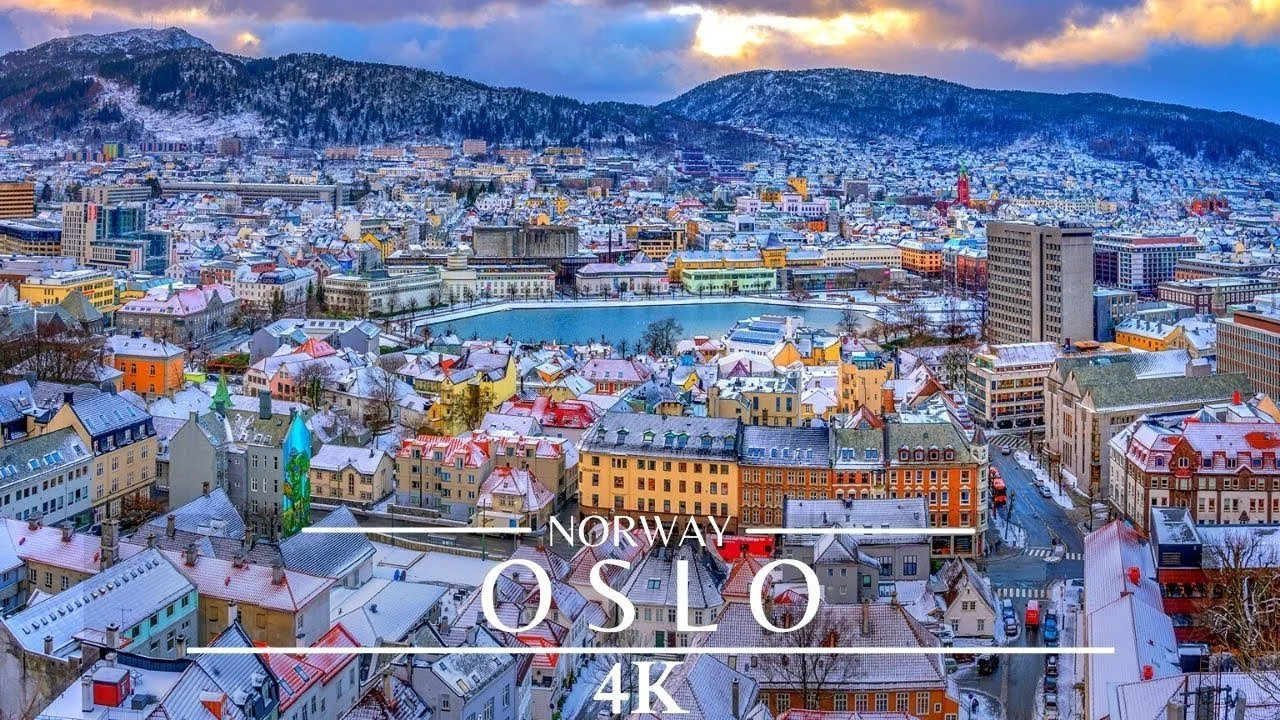
When Daniel Anderson stepped off an electric ferry in Oslo, he braced for the usual urban cacophony. It never came.
"What struck me most wasn’t the electric buses or low-emission zones -- although those are cool," recalls Andersen, who runs a waste removal company in London. "It was the car-free city center policy, which makes walking and cycling feel like the default. It doesn’t just reduce emissions; it changes how you experience the city."
That's no accident. Oslo, and indeed most of Norway, is quiet not only because of forward-looking government policies, but also because of widespread electrification. Virtually all of the new cars sold in Norway are EVs.
Oslo is one of a handful of up-and-coming sustainable destinations, according to the Global Destination Sustainability Index (GDSI). A new wave of cities, from Belfast to Sydney, is emerging to claim the sustainability leadership mantle. And in 2026, they may be worth a visit.
“These cities are building sustainability into daily life, not just tourism, through quiet electric transit, cleaner streets, and circular economy practices,” says Jennifer Kaplan, sustainability strategist and professor at Presidio Graduate School. “For travelers, that means car-free transportation, walkable neighborhoods, and experiences that seamlessly feel good and do good.”
So where are these places?
Oslo: A vacation in the future
Oslo’s car-free core is a sensory revelation for visitors who are used to hyperactive city centers. Evelyn Gong, who teaches operations management at Carnegie Mellon University, says the city has steadily increased the ratio of electric public transport and enabled bike tours around the city. "Any of these thoughtful efforts could make an eye-opening experience for travelers,” she says. But mostly, it's the quiet. I experienced it myself when I visited Norway recently. You really have to look both ways before crossing the street because there's no car noise. Visiting a place like Oslo is worth it because experts say this is what most cities in the developed world will sound like soon. So in a way, It's like stepping into the future when you take a vacation.
Aalborg: hidden circularity
Ben Johnson, the CEO of a waste management company in the U.K., expected clean streets and bike lanes in Aalborg, Denmark. On a recent visit, he found something far more ingenious beneath the surface. "The city uses waste heat from data centers to warm residential neighborhoods," he recalls. "You’d never notice it as a visitor, but it’s one of the smartest examples of circular energy I’ve seen."
Aalborg is a pioneer in industrial symbiosis – where one company's waste becomes another's resource. Comparing Aalborg to other cities, Johnson highlights what you don’t see: no traffic noise, no trash overflow, no unnecessary plastic anywhere. Hotels list carbon offset policies and farm origins on breakfast menus.
"These cities aren’t just greenwashing for tourism," Johnson adds. "They’re building systems for residents first and tourists second. That’s what makes the experience different."
Singapore: An engineered oasis
Steffen Lehmann, a professor of architecture and urbanism at the University of Nevada at Las Vegas (UNLV) has a checklist of Singaporean sustainability initiatives: Green building initiatives, advanced water recycling, a "car-lite city" vision where 80 percent of journeys use sustainable transport, and over 400 parks. "Wherever you are in Singapore," Lehmann notes, "it’s never far to reach a green space."
Eugene Leow, who runs a marketing firm in Singapore, sees it daily: "Sustainability is built into daily life," he says. "The impact is subtle but powerful -- you walk into a shopping mall and see rooftop gardens." The difference for travelers? A clean, green metropolis where choosing sustainable options – from transit to refilling water bottles – is the path of least resistance.
Sydney: more trees and bike lanes
Sydney, like many sustainability up-and-comers, targets net-zero by 2035. But it also has a long list of achievements, which include using 100 percent renewable electricity in the city's operations since 2020. It also has an ambitious goal of adding 50 percent more tree canopy by 2030 and 75 percent by 2050, and it has a strong focus on upscaling solar power to become the main source of energy. Sydney has doubled down on walking and cycling infrastructure, including the George Street transformation.
Although Sydney has a lot to talk about -- including a hyper-efficient mass transit system -- it remains an emerging destination for sustainability. Indeed, if you're visiting Sydney, you wouldn't notice most of these initiatives unless someone pointed them out.
Belfast: A green rebirth
Belfast is forging a new identity steeped in sustainability. The city pulses with tangible projects. For example, there's room2 Belfast, a trailblazing "hometel" with 175 rooms, operating as a 100 percent electric, net-zero property. Think café bars made from recycled glass, carpets from fishing nets, and reception desks from salvaged plastic bottles.
Peter Muggleton, a managing director for an architectural hardware company in South Croydon, England, visited Belfast recently. "I was amazed by the abundance of electric buses and recycling bins at every turn," he says. "It was a stark contrast from the chaotic streets of less environmentally conscious cities."
But are they worth the trip?
I've visited most of these up-and-coming sustainability destinations. Overall, these cities are clean and safe, and they have visionary leaders who understand the value of sustainability.
But are these new green destinations worth the plane ticket? Well, you won't find sustainability mascots or designated "green zones" where solar panels outnumber people. What you will find is far more profound: a glimpse into a future where urban living isn't just less damaging, but genuinely more livable.
"It will be a fascinating opportunity for other city leaders to visit, learn and bring home some of these solutions," says Lehmann, the UNLV professor.
These cities aren't merely adopting sustainable practices; they're redefining themselves. They're trading the roar of traffic for the whisper of electric ferries, the stench of exhaust for the scent of urban gardens, and the headache of waste for the ingenuity of circular systems. It's a subtle revolution, often unfolding in the quiet hum of an electric bus or the unnoticed warmth of a data center's radiant heat from below.
You might not see it, but you'll certainly feel it in the cleaner air, the calmer pace, and the thoughtfulness in the urban fabric.